
THE SHORT ANSWER"Rats and mice are drawn to four things: food, water, shelter, and an easy way inside. Around Sacramento homes, the most common attractants are fallen fruit, pet food and bird seed, open compost and trash, dense plants like ivy, and small gaps around doors, vents, and pipes. Removing them makes your home less inviting, but rodents already inside need their entry points found and sealed."
You hear scratching in the ceiling at night. Or you find droppings behind the pantry door. The first question most homeowners ask is: why my house?
It usually isn't because the house is dirty. Clean homes get rats and mice too, because many of the things that attract them are outside: a citrus tree dropping fruit, a bag of dog food in the garage, a bird feeder, or a gap under the garage door. This guide explains what attracts rats and mice to Sacramento homes and yards, what you can change, and when it makes sense to call for rodent control in Sacramento.
What Attracts Rats and Mice to a House?
Rats and mice come for the same four things: food, water, shelter, and a way in. If your property offers all four, it becomes a place worth staying.
Roof rats prefer fruit, tree nuts, berries, and snails. Norway rats lean toward grains, meat, and nuts. House mice mostly eat seeds and grains, and a single mouse can eat up to 20% of its body weight each day.
Rats need a regular water source. Mice get most of their moisture from food but will look for liquid when they need it.
Roof rats nest above ground in trees, shrubs, and dense plants, then move into attics and walls. Norway rats burrow along foundations and under woodpiles. Mice build nests from shredded paper and soft material in quiet, sheltered spots.
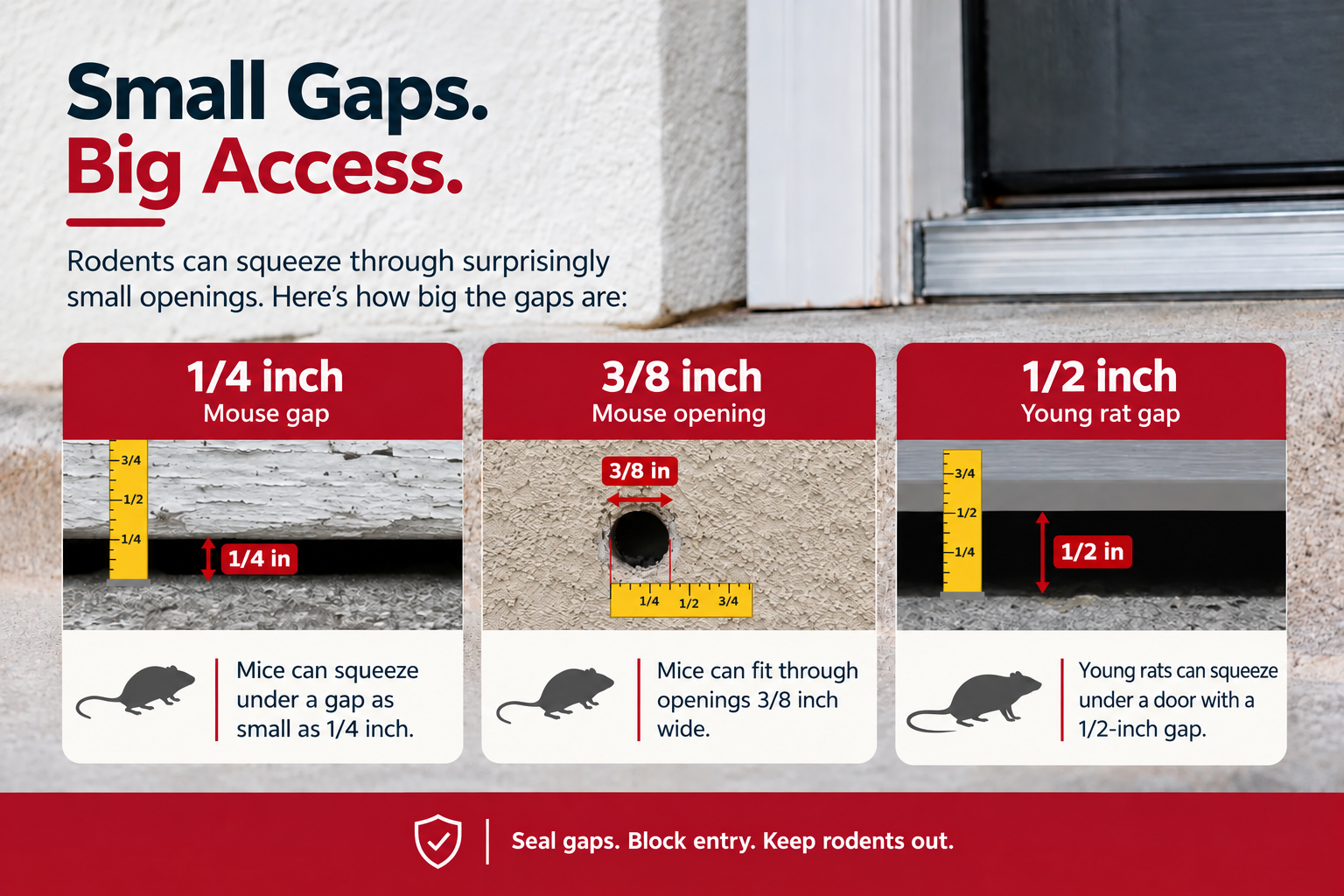
Young rats can squeeze under a door with a 1/2-inch gap. Mice can slip under a 1/4-inch gap and through a 3/8-inch opening.
What Attracts Rats to Your Yard in Sacramento?
In many Sacramento neighborhoods, the rodent problem starts in the yard. Roof rats are strong climbers, and they often live outside and travel along fences, trees, and utility lines to reach the roof. UC IPM notes that roof rats routinely travel 300 feet or more for food, so a fruit tree two houses down can still bring them to your street.
Fruit, Nut, and Citrus Trees
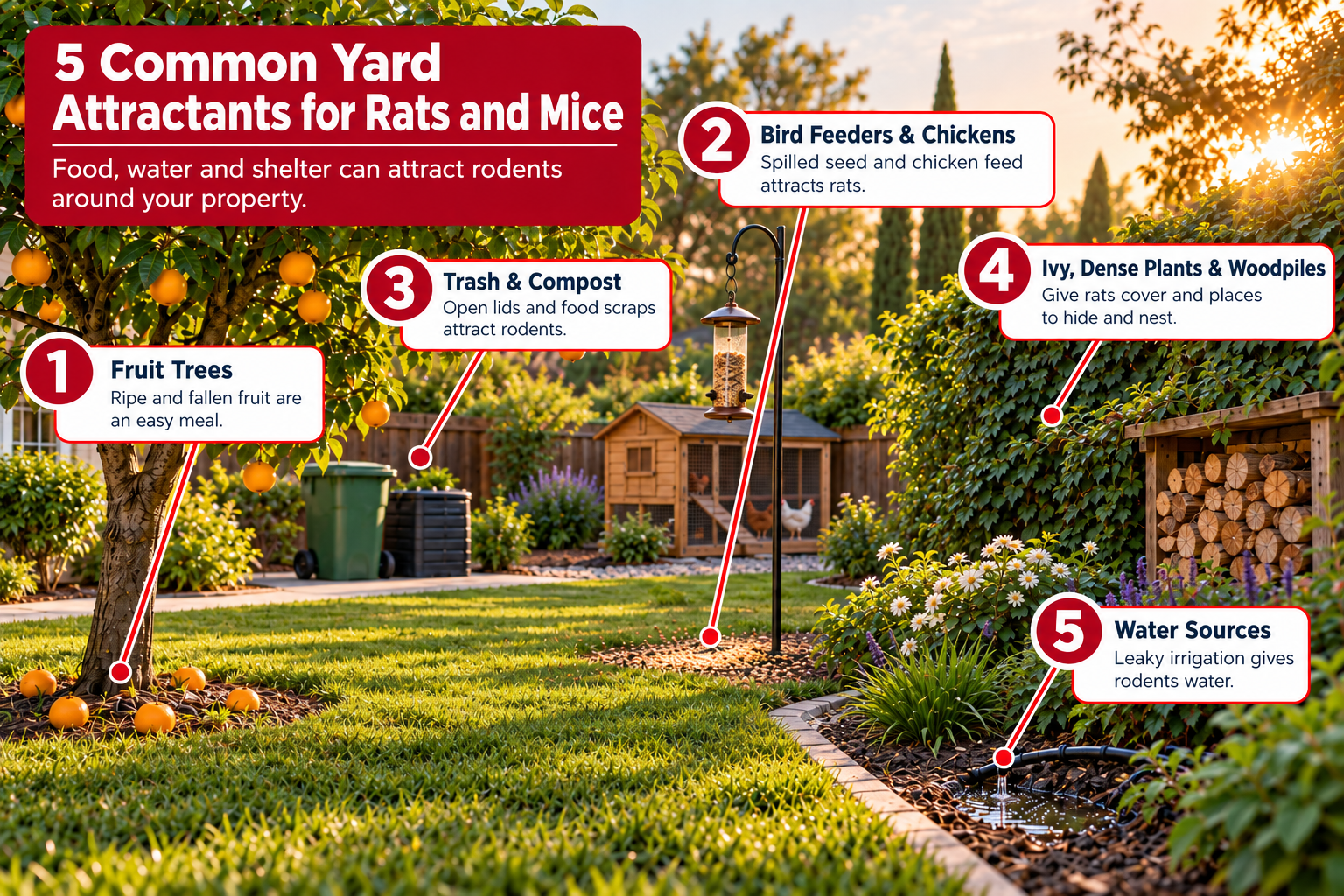
Citrus, avocado, stone fruit, and nut trees are some of the biggest rat magnets in a backyard. Ripe fruit on the branch is food, and fallen fruit on the ground is an easy meal. Pick fruit as it ripens and pick up what falls, especially in late summer and fall.
Bird Feeders and Backyard Chickens
Spilled bird seed and chicken feed are reliable food sources. Oregon State University Extension lists pet and chicken feed and bird seed among the top rat attractants. Keep feeders on poles away from fences and eaves, clean up seed on the ground, and store feed in sealed metal or hard plastic containers.
Pet Food, Dog Waste, Compost, and Trash
Pet food left outside overnight is an open invitation. Feed pets only what they will eat at one time and store the rest in rodent-proof containers. King County Public Health recommends picking up dog waste in the yard daily as part of rodent prevention. Keep garbage in bins with tight-fitting lids and compost in rigid, closed containers. Even a compost pile without food scraps can attract rats if it isn't hot enough to kill the insects they feed on.
Ivy, Dense Plants, and Woodpiles
Thick ivy, star jasmine, honeysuckle, and overgrown shrubs give rats cover and a place to nest. Woodpiles and stored items give Norway rats a place to burrow. UC IPM recommends removing tree limbs within 6 feet of the roof and keeping dense plants at least 2 feet away from the house.
Water Around the Yard
Sacramento's long, dry summers make any steady water source stand out. Leaky irrigation, dripping hose bibs, pet water bowls, birdbaths, and ponds can all keep rodents close to your home.
What Attracts Mice Inside Your Home?
House mice stay close to home. They seldom travel more than 30 feet from their nest and food, so once they find a good spot inside, they tend to stay. UC IPM notes that mice often move indoors in autumn as nighttime temperatures drop.
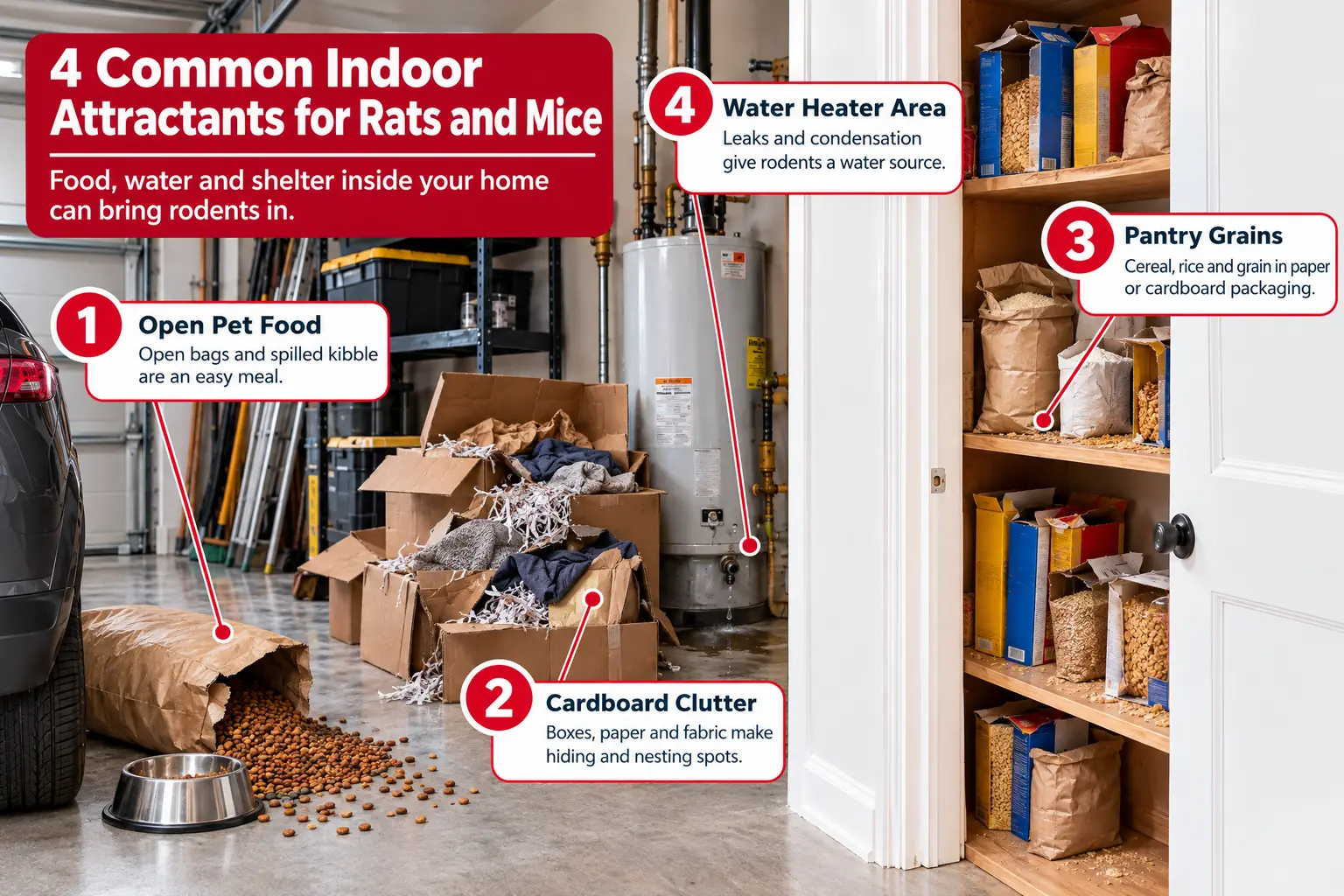
Inside, mice are drawn to:
- Pantry food: cereal, grains, rice, pet food, and bird seed, especially in paper or cardboard packaging
- Garage storage: open bags of dog food, grass seed, or bird seed
- Nesting material: cardboard boxes, paper, fabric, and insulation in quiet corners of the garage, attic, or closets
- Moisture: leaks under sinks and condensation around water heaters
Cleaning up helps, but it has limits. UC IPM puts it plainly: good sanitation seldom completely controls house mice, but poor sanitation can attract them.
Why Do Rats Suddenly Appear?
It can feel like rats show up overnight, but there is almost always a reason:
- A new food source. Fruit starts ripening, a bird feeder goes up, or chickens move in.
- Colder weather. As fall nights cool down, rodents look for warm shelter.
- A new opening. A vent screen tears, a garage door seal wears out, or a tree branch grows onto the roof.
- They were already there. Rats and mice are active at night and stay out of sight. By the time you hear or see them, they may have been around for a while. Our guide to the 7 signs rats or mice are hiding in your home covers what to look for.
What Smells Attract Rats and Mice?
Rats and mice follow the smell of food. Pet food, garbage, compost, grease, fallen fruit, and stored grain all give off odors that draw them in. The best defense is to seal food and trash so there is nothing to smell.
If you are trying to lure a mouse into a trap, that is a different question. Our guide on how to lure a mouse out of hiding covers baits that work.
How to Make Your Home Less Attractive to Rats and Mice
Use this checklist to remove the biggest attractants around a Sacramento home:
- Pick ripe fruit and pick up fallen fruit and nuts
- Store pet food, bird seed, and chicken feed in sealed metal or hard plastic containers
- Feed pets only what they eat at one meal
- Use garbage and compost bins with tight-fitting lids
- Pick up dog waste daily
- Mount bird feeders on poles and clean up spilled seed
- Trim tree limbs within 6 feet of the roof
- Thin ivy and keep dense plants at least 2 feet from the house
- Fix leaky irrigation and plumbing
- Clear clutter from the garage and attic
- Seal openings larger than 1/4 inch with steel wool, wire screen, or sheet metal, not foam, plastic, wood, or caulk, which rodents can chew through
Why Removing Attractants Isn't Always Enough
Cutting off food and water makes your home less inviting. But if rats or mice are already living in your attic or walls, cleaning up will not make them leave. They already have shelter, and they still have the gap they used to get in.
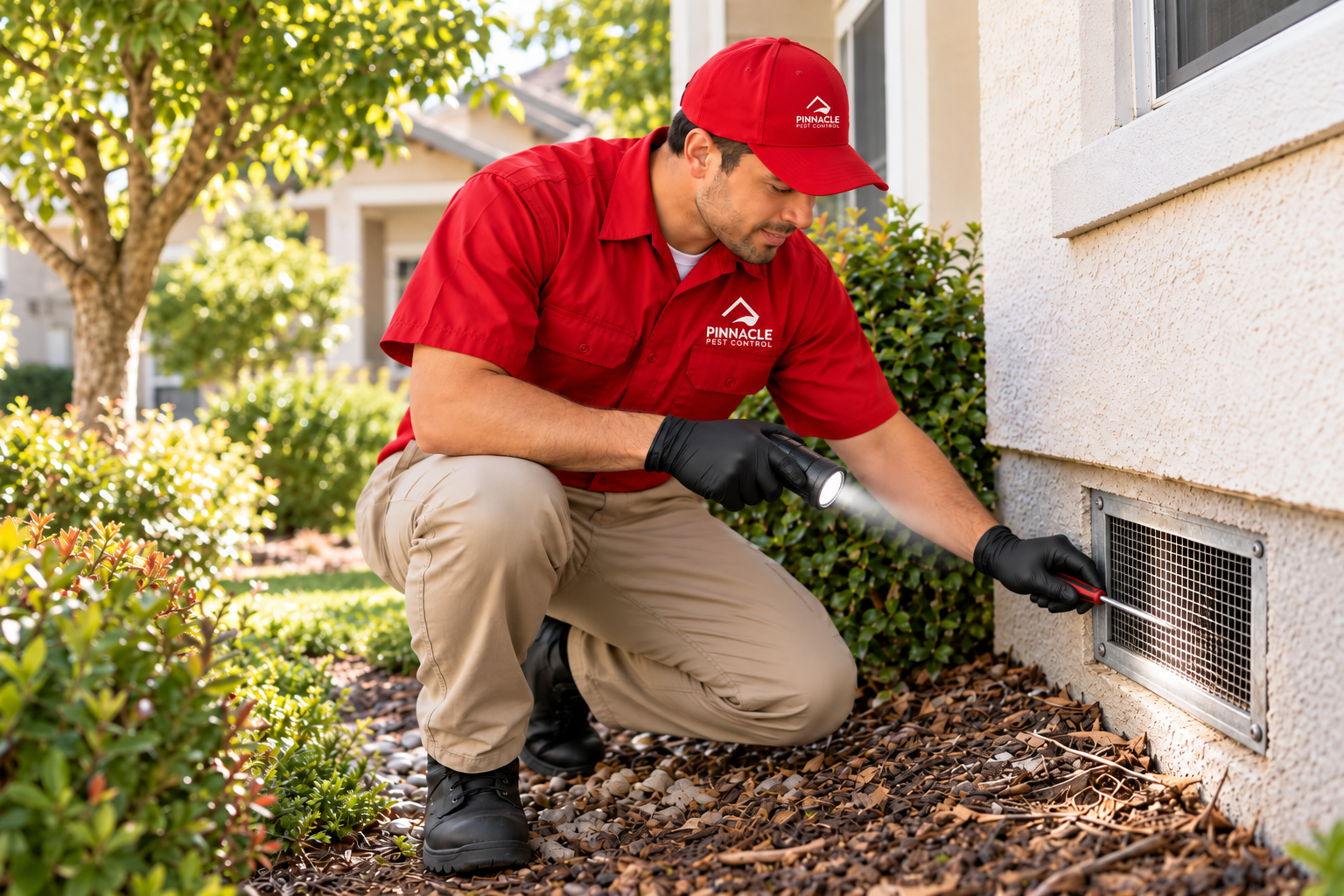
Finding every gap is the hard part. Openings can be as small as 1/4 inch and hidden along rooflines, vents, pipes, and the garage. That is why Pinnacle treats rodent control as a complete system, not a trap-and-go visit:
The exterior and attic to find entry points and check for contamination and odor.
The rodents living inside with trapping.
Them by sealing entry points with materials designed to stop rats from re-entering.
By vacuuming contaminated areas and treating them to neutralize odor.
New activity with tamper-resistant exterior bait stations, serviced on a recurring basis.
The full solution with a two-year warranty.
We also offer a lower-cost trap-only option with a shorter warranty, and we will walk you through both so you can choose. Learn more about rodent exclusion and our Sacramento rodent control services.
Frequently Asked Questions
Do bird feeders attract rats?
Yes. Spilled seed on the ground is an easy food source. Keep feeders on poles, away from fences and the roofline, and clean up seed regularly.
Do chickens attract rats?
Chicken feed can. Store feed in sealed metal containers and remove uneaten feed at night.
Does dog poop attract rats?
Public health agencies such as King County Public Health recommend picking up dog waste daily as part of rodent prevention. A clean yard gives rodents fewer reasons to visit.
Does compost attract rats?
It can, especially open piles with food scraps. Use a closed, rigid bin with a tight lid.
How do you make rats go away?
Remove what attracts them and seal openings larger than 1/4 inch. If rats are already inside, professional removal and exclusion are usually needed to stop them from coming back.
Hear Something at Night?Get a Free Inspection Before It Spreads.
 Free on-site inspection, every time.
- Two-year guarantee on the full exclusion solution.
- Licensed, insured, family-run in Sacramento since 1998.
 Free on-site inspection, every time.
 Two-year guarantee on the full exclusion solution.
 Licensed, insured, family-run in Sacramento since 1998.
Schedule Your Free Rodent Inspection
*Terms and conditions apply. Final eligibility language should be confirmed before publication.