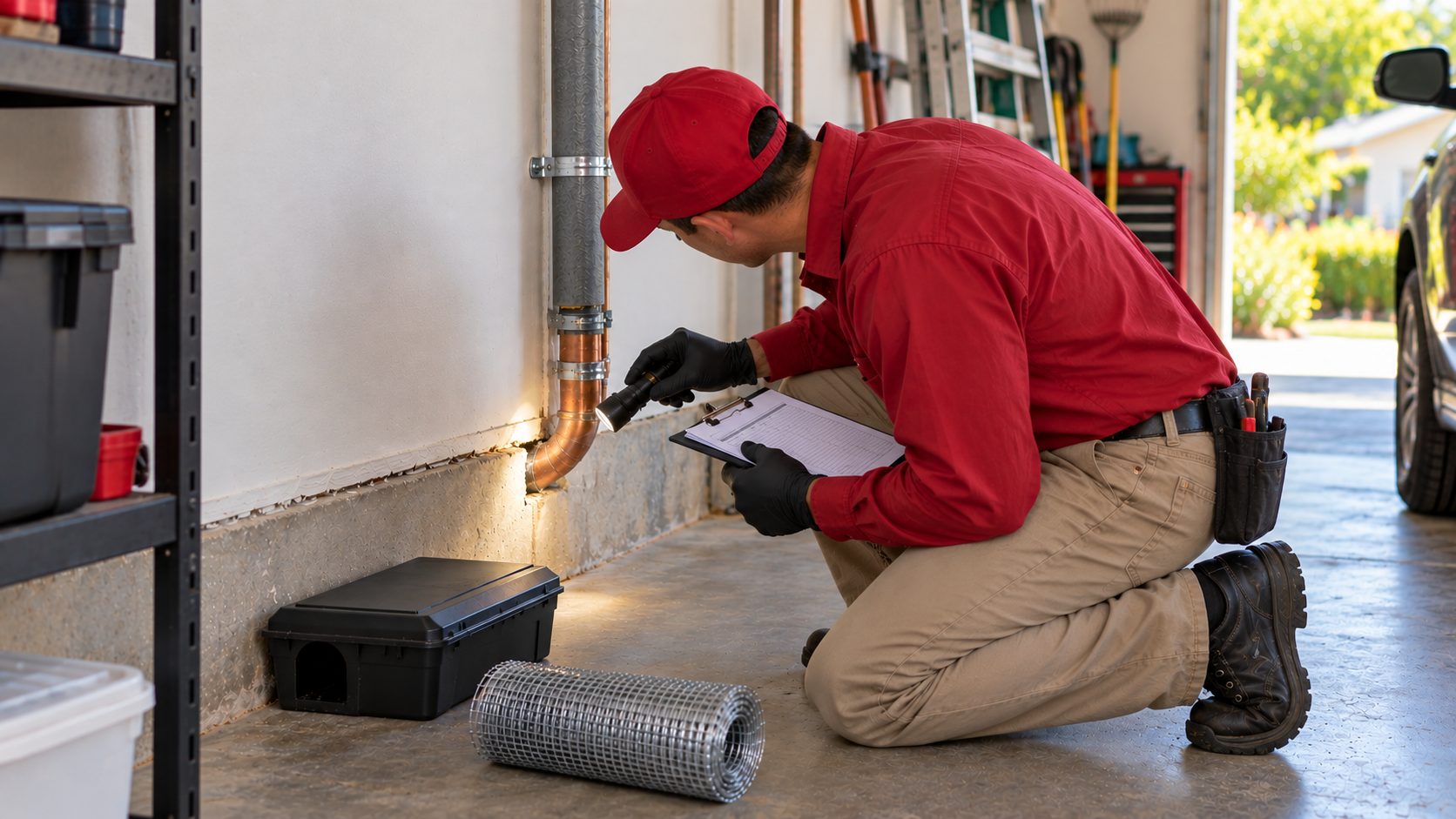
THE SHORT ANSWER"To get mice out of your walls, do not seal anything yet and do not put poison in the wall. Mice leave the wall voids at night to find food, so place snap traps along the baseboards where the scratching is loudest and near any gaps where they enter, check daily, and once activity stops, find and seal every quarter-inch gap they were using. Poison inside a wall usually means a mouse dies inside it, and then you have a much worse problem: the smell."
Why Mice End Up Inside Your Walls
The space inside your walls is a highway system built for a mouse. Wall voids are dark, warm, protected from everything that hunts them, and connected: a mouse can travel from the garage to the kitchen to the ceiling without ever stepping into the open. Add insulation, which makes perfect nesting material, and a gap the width of a pencil somewhere along your foundation, siding, or the openings where pipes and wires enter, and your walls become the best real estate in the neighborhood.
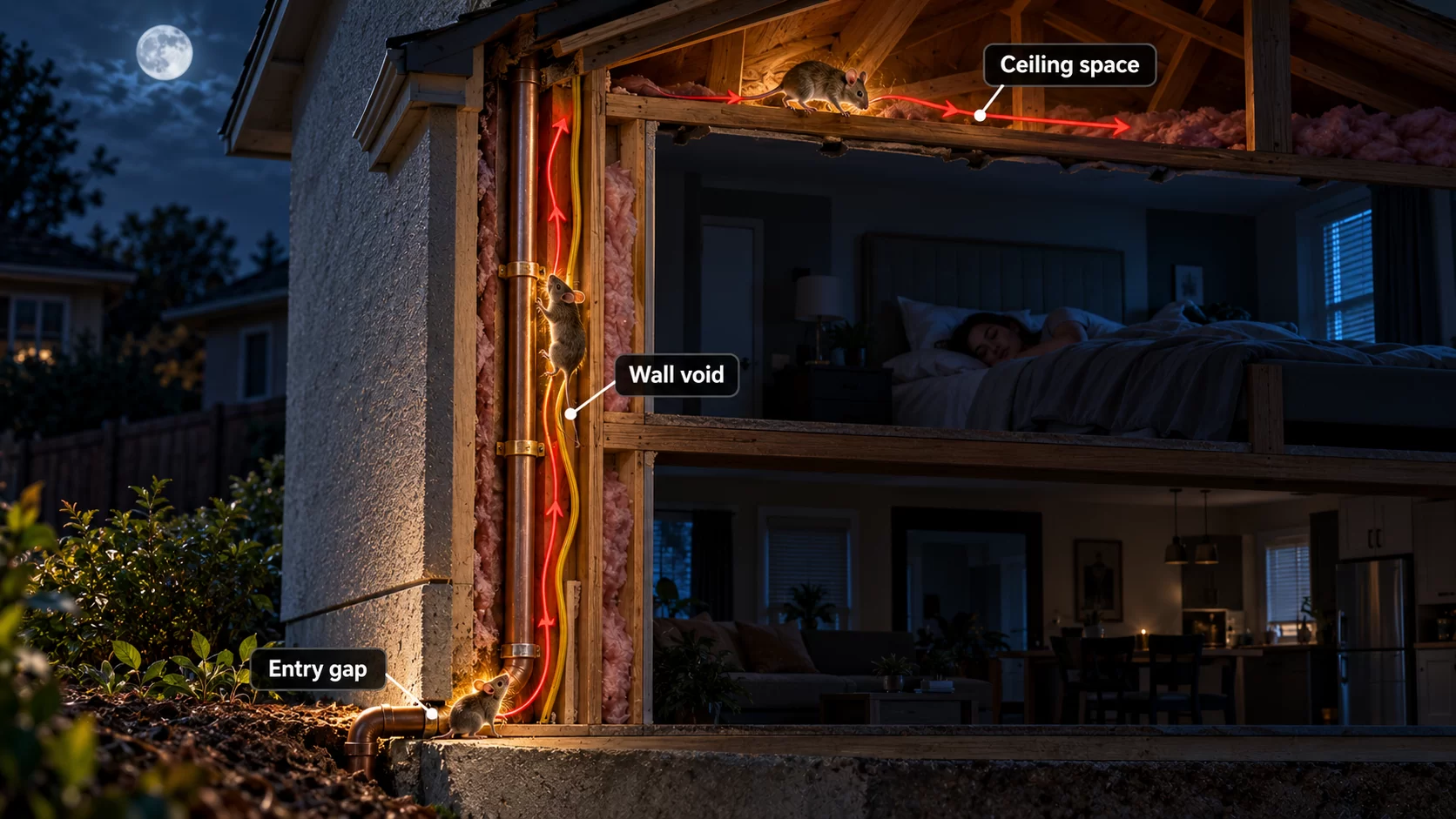
In Sacramento, this is a fall story. When nights cool down and the first rains arrive, mice that spent the summer outside move indoors, which is why the scratching almost always starts between October and December.
What Mice in Walls Sound Like
Mice are light, so the sound is soft: faint scratching, skittering, or light gnawing, usually at night and often near the kitchen, bathroom, or wherever pipes run through the walls. You might also hear high-pitched squeaks. Heavy thumping or something that sounds like it is jogging across your ceiling is not a mouse. That points to rats, and Sacramento's roof rats are the usual suspects.
For a full breakdown of the sounds and what each one means, see our guide to mouse sounds and how to identify them. If the noise says rat, start with our guide to getting roof rats out of walls instead.
One more sound clue: if you hear activity during the daytime, take it seriously. Mice prefer the night, so daytime noise often means the population has grown enough that some mice are being pushed to feed at off hours.
Hearing It in the Ceiling Too?
Walls and ceilings are the same connected system. The space above your ceiling drywall connects to the wall voids, and mice (and roof rats) use both as travel routes. Scratching that moves from a wall up into the ceiling, or sounds directly overhead at night, does not mean you have two problems. It means the rodents are using the whole highway, and the fix is the same: trap the activity zone, then seal the entries. Ceiling noise that is loud or thumping tilts the answer toward rats.
Scratching but No Droppings? Here's Why
This confuses everyone: you clearly hear something in the wall, but there is not a single dropping anywhere. That usually means the mice are living entirely inside the wall voids and attic and have not started foraging in your living space yet, or they are feeding somewhere you have not looked, like the garage, the pantry's deepest shelf, or behind the stove. No droppings does not mean no mice. It means you caught it early, which is the best time to act.
Is It Just One Mouse?
Almost never. Mice live in family groups, and a female can produce a new litter every three to four weeks, five to six pups at a time. By the time scratching is loud enough to wake you, there is usually a nest, not a visitor.
Catching one mouse and hearing silence for two nights is not the end of the story. Treat the first mouse as the announcement, not the whole problem.
What Damage Do Mice Do Inside Walls?
Three things, in order of cost.
They gnaw constantly, and chewed wiring inside a wall is a genuine electrical hazard.
They shred and compress insulation for nests, which quietly costs you heating and cooling efficiency.
This causes the musty odor in rooms where mice have been active.
That contamination is why professional jobs include cleanup, not just removal.
How to Get Mice Out of Your Walls, Step by Step
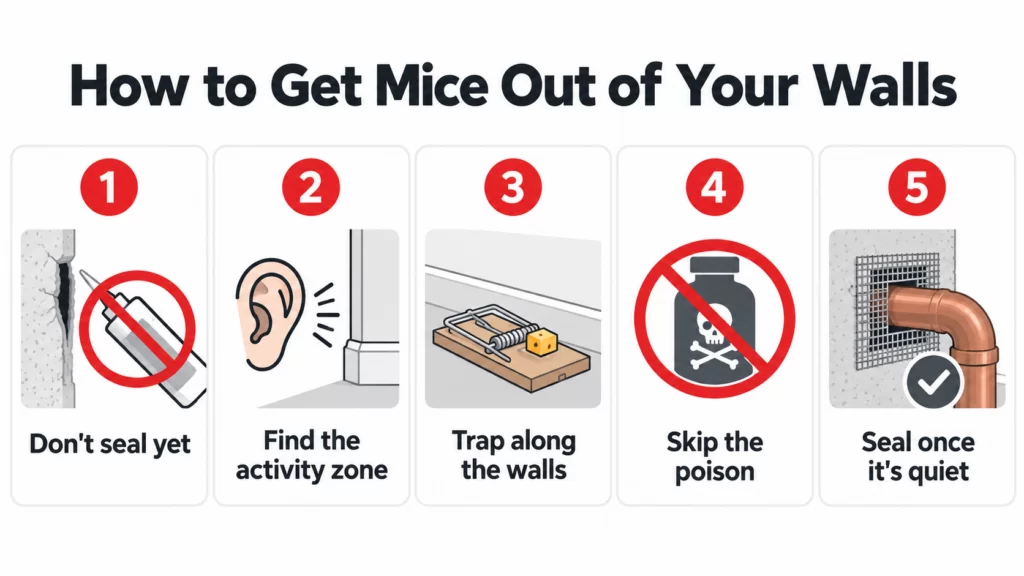
The order matters here. Most DIY attempts fail because the steps happen in the wrong sequence, not because the traps were bad.
01Do not seal yet
It feels logical to close the holes first, but sealing with mice still inside traps them in the wall, where they will either chew a new exit or die in the void.
02Find the activity zone
Note where the scratching is loudest and at what time. Then look for droppings, gnaw marks, or greasy rub marks along the baseboard.
Where to check: the rooms on both sides of that wall, plus the garage, under sinks, and behind appliances.
03Trap along the walls, not in the middle of the room
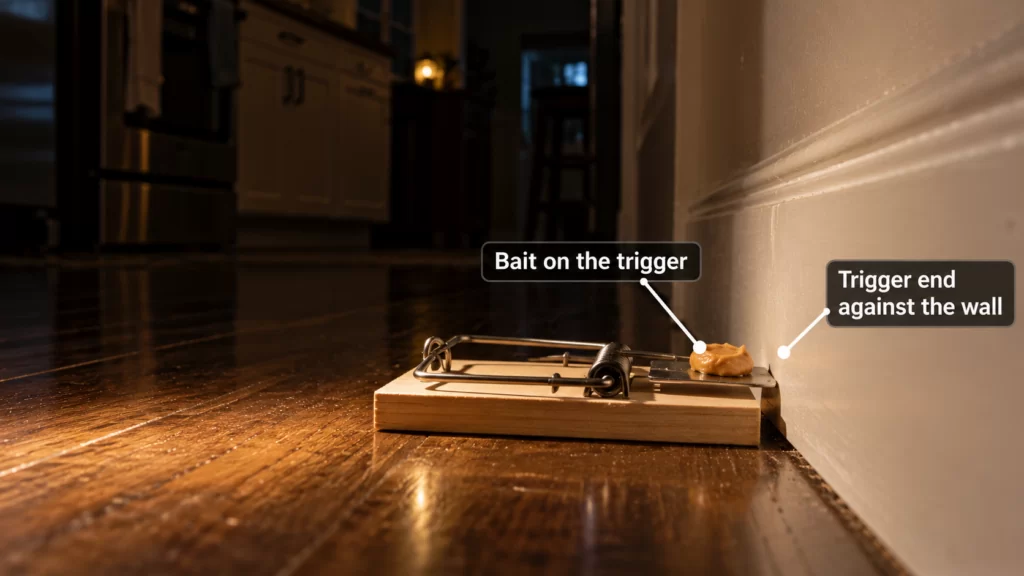
Mice hug edges. Set snap traps directly against the baseboards near the activity, trigger side facing the wall, and near any gap you suspect they use. A smear of peanut butter beats cheese. Check and reset daily, and expect the first results within the first few nights if the placement is right.
04Skip the poison
Poison in or near a wall almost guarantees a mouse dies inside the wall, and a dead mouse in a wall void can smell for weeks. If it comes to that, here is how to deal with dead mouse smell, but the better move is not to create the problem. If you want to draw them into the open where traps can work, our guide on how to lure a mouse out of hiding covers it.
05Once it goes quiet, seal everything
A mouse only needs a gap of about a quarter inch, the width of a pencil. Use steel mesh and proper sealant, not spray foam alone, which mice chew through.
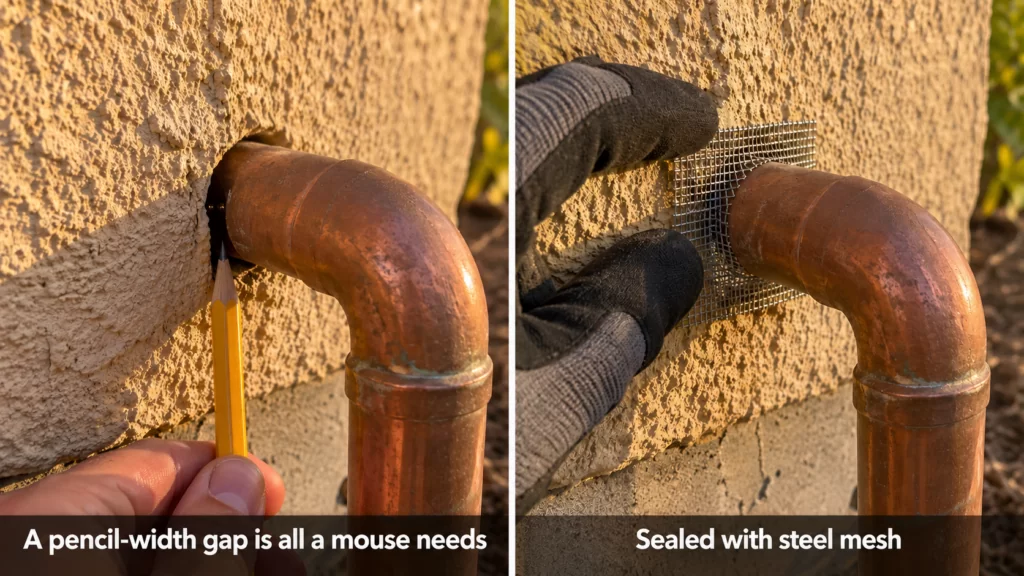
Walk the exterior: foundation vents, the gap under the garage door, openings where pipes and cables enter, and the roofline.
Can Mice Climb Walls?
Yes, and better than you would hope. Mice climb rough vertical surfaces like stucco and brick, and inside the wall voids they travel up and down using pipes, wires, and the wood framing like a ladder. That is why the scratching can be at the baseboard one night and above the ceiling the next, and why sealing only the ground-level gaps often is not enough.
How Exterminators Get Mice Out of Walls
Here is what you are actually paying for when you call a professional, and why it ends the problem instead of pausing it. At Pinnacle, the Rodent Defense System works in sequence:
- Inspection. A full walk-through to map every entry point and confirm what species you have.
- Trapping. A program placed on the routes mice actually use.
- Exclusion. Every gap sealed with materials rodents cannot chew through.
- Cleanup. Removal of the contamination and nesting material they leave in walls and attics.
- Ongoing exterior protection. So the next wave of mice does not move into the same walls.
Any rodenticide we use goes in locked, tamper-resistant stations placed by licensed technicians, never loose and never inside your walls.
Is It Mice or Rats in Your Walls?
It changes the plan, so it is worth 60 seconds to check.
| What you notice | Mice | Rats (usually roof rats) |
|---|---|---|
| Sound | Soft scratching, skittering, squeaks | Loud thumping, heavy running overhead |
| Droppings | Rice-grain size | Olive-pit size |
| Where it's loudest | Walls near the kitchen | Attic and ceiling |
| Behavior | Curious, trap easily | Avoid new objects, defeat DIY trapping |
| What to do | Follow the steps above | Different approach: see the roof rats guide |
If it is rats, the approach is different: see our roof rats in walls guide.
Hear Something at Night?Get a Free Inspection Before It Spreads.
 Free on-site inspection, every time.
- Two-year guarantee on the full exclusion solution.
- Licensed, insured, family-run in Sacramento since 1998.
 Free on-site inspection, every time.
 Two-year guarantee on the full exclusion solution.
 Licensed, insured, family-run in Sacramento since 1998.
Schedule Your Free Rodent Inspection
*Terms and conditions apply. Final eligibility language should be confirmed before publication.
Frequently Asked Questions
How do you get rid of mice in walls fast?
Snap traps along the baseboards nearest the noise, set the same day you hear it, checked daily. Most early infestations show results within the first few nights. Fast also means not making it worse: no poison, and no sealing until the activity stops.
How long does it take to get mice out of walls?
With correct trap placement, an early problem often quiets down in one to two weeks. Established nests take longer because new mice keep maturing, which is why sealing the entries is what actually ends it.
How long do mice stay in walls?
As long as the wall keeps working for them. Mice do not move out on their own; they nest, and a female can produce a new litter roughly every three to four weeks. A wall that scratches in October and gets ignored is a bigger problem by December.
What do mice in walls sound like?
Light scratching, skittering, gnawing, and occasional squeaks, mostly at night. If it sounds heavy, it is likely a rat.
Why do I hear scratching but find no droppings?
The mice are staying inside the voids or feeding somewhere out of sight. It is an early-stage sign, not an all-clear.
Can you smell mice in your walls?
Only once they have been there a while. An established infestation gives off a musky, ammonia-like odor, strongest in enclosed spots like cabinets, closets, or the room with the most wall activity. A brand-new problem usually has no smell, which is why sound is the earlier warning. A strong, concentrated odor in one spot usually means a rodent died in the wall, which is its own cleanup job.
Can mice chew through drywall?
Yes. Mice gnaw through drywall, spray foam, plastic, and soft wood. That is why exclusion work uses steel mesh and rodent-rated sealants instead of foam alone.
Do mice leave the walls during the day?
Mostly no. Mice are nocturnal and use the walls as shelter during the day, coming out at night to feed within about 10 to 25 feet of the nest. Daytime noise can be a sign of a larger population.
Will mice leave on their own?
No. A wall void with warmth, nesting material, and food nearby is exactly what a mouse wants. They stay until they are removed and the entries are sealed.
Hearing It Every Night? Get It Inspected Free
You do not have to guess what is in your walls. Pinnacle Pest Control has served Sacramento since 1998, and our inspectors will tell you exactly what you are hearing, where it is getting in, and what it takes to make your house quiet again. Schedule your free rodent inspection or call (916) 378-7564.