THE SHORT ANSWER"Rats and mice usually leave signs before you ever spot one - droppings, scratching at night, chewed wires, smudge marks, a hidden nest, an unexplained smell, or a pet fixated on one spot. Two or more of these in a Sacramento home is reason enough to schedule a rodent inspection rather than wait to see the animal itself."
Most people don't notice a rodent problem until it's already settled in. Rats and mice move at night, stick to the same handful of routes through a house, and stay out of sight for as long as they can manage. By the time you actually see one in a Sacramento home, there's usually more going on behind your walls than what you're looking at. That's exactly the kind of situation rodent control in Sacramento is built to catch early.
Pinnacle has been handling this in Sacramento since 1998. For a long time, the industry treated rats and mice as an afterthought - folded into a general pest visit, or handled with a cheap trap call that removes what's inside but leaves the entry point wide open, so the company just gets called back out.
That's why we run rodent control as its own standalone program instead of a smaller add-on to general pest service.
Rat or Mouse? It Actually Changes Where You Should Look
Two rodents show up most often in Sacramento homes: the roof rat and the house mouse. People tend to lump them together, but they don't behave the same way, and knowing which one you've got tells you where to check first.
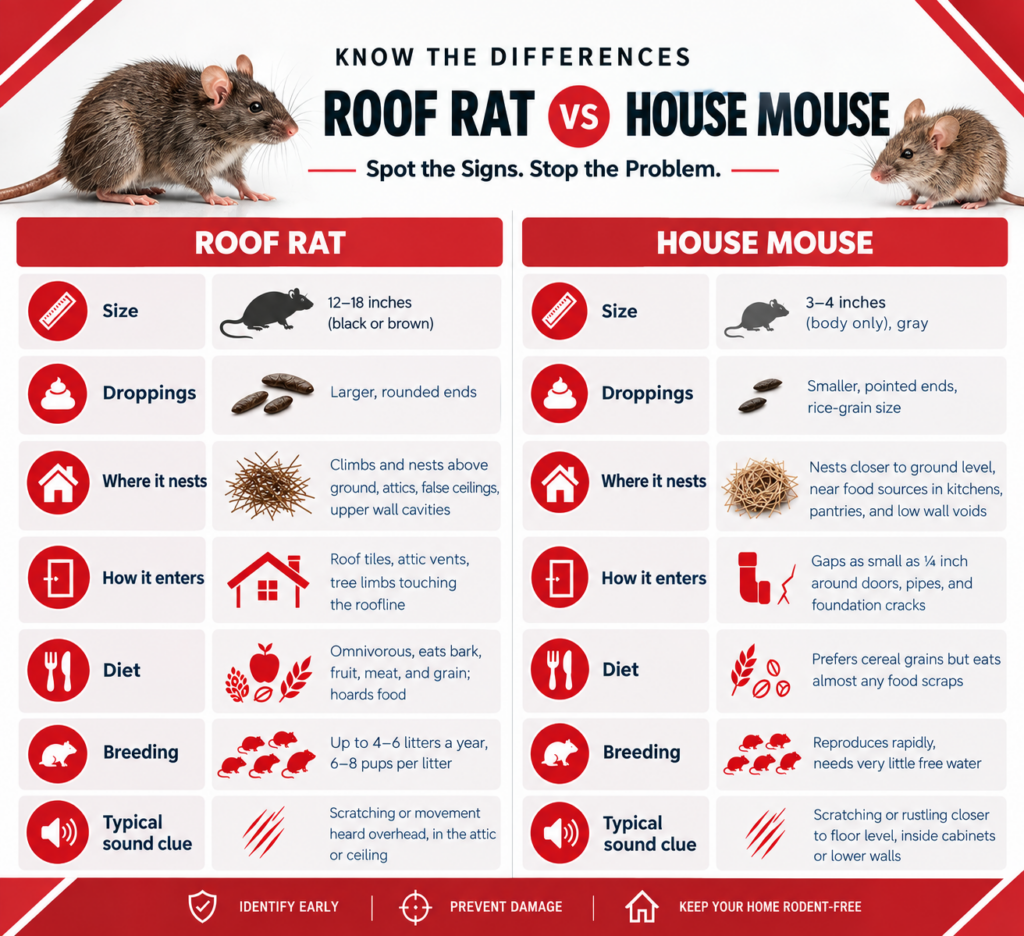
Overhead sounds usually point to a roof rat working through the attic. Something low and close to the kitchen is more likely a mouse. The fix looks similar for both (inspect, trap, seal, clean), but a technician checks different spots first depending on which one it is. For a deeper look at roof rats specifically, our rat control guide covers entry points and damage patterns in more detail, and our mouse identification guide breaks down what mouse sounds and signs look like on their own.
How Pinnacle Pest Control Handles a Rodent Job
When you call us for rodent control, the process follows the same order every time, because skipping a step is usually why the problem comes back:
Confirm the rodent, find the entry points, check the attic and exterior, and gauge how far things have spread, including any contamination or odor.
Remove the rodents that are already inside.
Seal the openings they used to get in, using materials meant to hold up against chewing and repeated attempts to force their way back through.
Vacuum out contaminated insulation and droppings, then treat the area to neutralize odor and bacteria left behind.
Installed and serviced on a recurring basis so new activity gets caught early.
A two-year guarantee on the full solution.
Two tiers: a trap-only visit costs less but carries a shorter warranty since it only removes what's already inside. The fuller package - trapping, exclusion, cleanup, and bait stations - carries the full two-year guarantee, because it solves the source of the problem, not just the symptom.
- A single mouse or isolated sighting caught early
- No signs of chewing, nesting, or repeat activity
- Budget-conscious removal of what's already inside
- Recurring sounds, droppings, or a confirmed nest
- Chewed wiring or visible entry points
- Wanting the two-year guarantee on the full solution
If an attic has been contaminated for a long time, trapping and a light cleanup usually isn't enough on its own. In those cases, the job can expand into full insulation removal, sanitizing the space, and re-insulating it to current standards. Financing is available for that level of work when it's needed.
We serve Sacramento and the surrounding East Bay area, and every rodent job includes a free inspection before anything is proposed, so you know exactly what's going on before deciding how to handle it.
7 Signs Rats or Mice May Be Hiding in Your Home
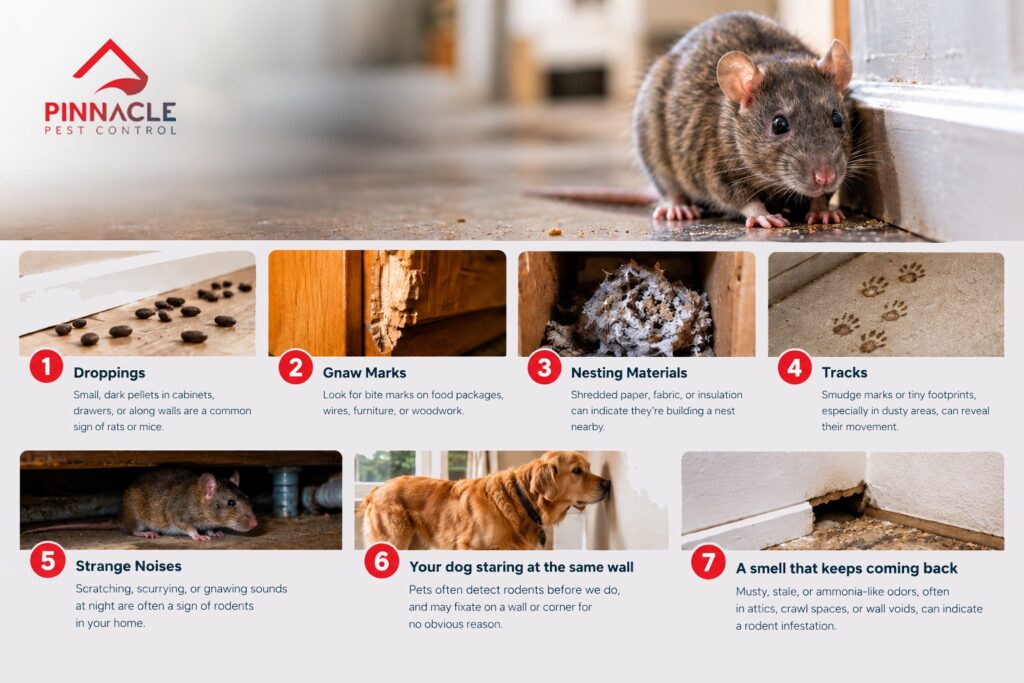
Small, dark, roughly rice-shaped. Mouse droppings taper to a point; roof rat droppings are bigger with rounded ends. Across more than one room means it's more than passing through.
A scratch, a scurry, sometimes a soft thump overhead once it's dark. The same sound in roughly the same spot more than once isn't the house settling.
Rodent teeth never stop growing, so they chew constantly. Chewed wiring is an actual fire risk — fresh shavings or exposed wire mean it isn't wait-and-see.
Rodents run the same route repeatedly, and body oil leaves faint streaks - a good clue to where activity is concentrated.
Shredded paper, fabric, or insulation bundled in a forgotten corner. Usually means young are nearby too, so removing the nest alone rarely solves it.
Not proof by itself, but a dog or cat suddenly alert to one spot, alongside anything else here, is worth checking.
Musty, stale, sometimes close to ammonia, from urine and droppings building up. It doesn't fade - it gets stronger over time.
If you've noticed the same few signs from this list repeating in the same areas week after week, that pattern almost always means something's settled in rather than just wandered through once.
Where Do Rats and Mice Actually Hide in a House?
Warmth, quiet, and easy food - that's what they're after every time. Not every house has all of these, so where you look depends a lot on how yours is actually built.
- Roof rats favor height and quiet
- Insulation makes easy nesting material
- Vents and roofline gaps are common entry points
- Undisturbed boxes create shelter
- Stored pet food is an easy food source
- Garage door gaps are an easy way in
- Quiet, dark, and rarely disturbed
- Pipe penetrations offer access
- Hard for homeowners to inspect directly
- House mice stay close to food
- Cabinet gaps and baseboards give access
- Unsealed pantry containers are an easy draw
How Do You Keep Rats and Mice Out of a Sacramento Home?
A mouse can squeeze through an opening as small as a quarter inch - smaller than most people would guess - so even a minor gap around a door or vent is worth closing. A few things that genuinely make a difference:
- Seal gaps around pipes, vents, doors, and utility lines, or have a proper rodent exclusion review done if you're not sure where they all are.
- Store pet food and pantry items in containers with real, sealed lids.
- Use trash cans with tight lids, not bags left out overnight.
- Clear clutter out of garages and attics - an undisturbed pile of boxes is basically an invitation.
- Handle moisture issues; damp spots draw in more than just rodents.
- Keep tree limbs trimmed away from the roofline - a branch touching the house is a bridge.
Activity in Sacramento tends to climb during the cooler months, roughly November through February, as rats and mice look for somewhere warm. Doing the prevention work before that shift beats doing it after.
When Should You Call a Professional Instead of Handling It Yourself?
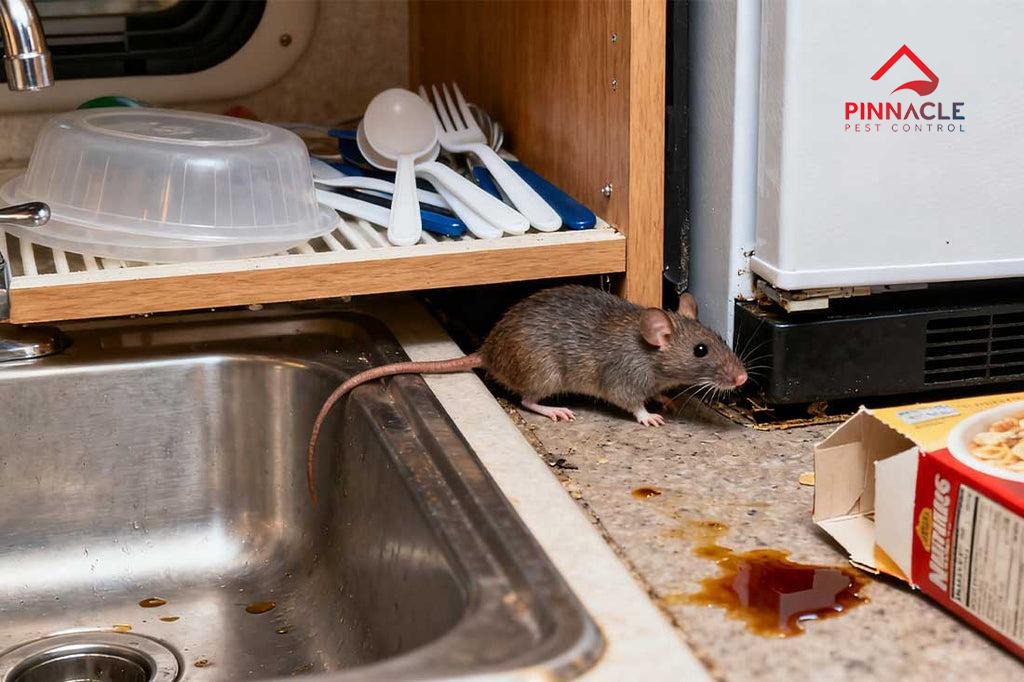
Call someone when the signs keep repeating, when you see a rodent moving around during the day, when there's activity happening inside a wall or ceiling, or when you've actually found a nest or real chew damage. A rat out during daylight is a bigger deal than people think, since they're normally nocturnal - seeing one awake and moving in daylight often means the population is bigger than what's visible.
Traps you buy yourself can pick off a rodent or two here and there. What they don't do is touch the entry points letting new ones in.
A real fix combines removal with exclusion - someone actually locating and sealing the openings rodents are using to come and go.
Rodent Control Cost: What You'll Actually Pay
Cost comes down to a handful of things: how big the property is, how bad the infestation has gotten, what kind of rodent it is, how many entry points need sealing, and whether anything in the attic or walls needs repair once they're out. Every property is different enough that a real number usually needs an inspection rather than a range pulled off a website. Pinnacle Pest Control offers free on-site inspections, so a technician looks at your specific situation and gives you pricing based on what's going on at your property, not a generic estimate.
Commercial Rodent Control in Sacramento: A Different Kind of Risk
The stakes shift a bit once it's commercial. A rodent problem in a restaurant, warehouse, or office can mean food contamination, a health code write-up, damaged inventory, or customers who notice and quietly stop coming back. Loading docks and shared walls between units tend to make commercial buildings more prone to repeat activity if nobody addresses the actual entry points. Commercial rodent control isn't a different process so much as the same one scaled up - inspection, trapping, exclusion, follow-up - just sized for a bigger building.
Hear Something at Night?Get a Free Inspection Before It Spreads.
 Free on-site inspection, every time.
- Two-year guarantee on the full exclusion solution.
- Licensed, insured, family-run in Sacramento since 1998.
 Free on-site inspection, every time.
 Two-year guarantee on the full exclusion solution.
 Licensed, insured, family-run in Sacramento since 1998.
Schedule Your Free Rodent Inspection
*Terms and conditions apply. Final eligibility language should be confirmed before publication.
What Real Rodent Control in Sacramento Should Look Like
Search "rodent control near Sacramento" and you'll get more names than you know what to do with, and most of them will say roughly the same things. What tells them apart isn't the ad copy. It's whether there's a real inspection behind it, a plan built around the actual rodent involved instead of a generic script, exclusion work that closes off what let them in in the first place, and a guarantee that holds up if they come back.
We've been doing this in Sacramento and the East Bay since 1998, as a licensed, insured, family-run company. Rodent jobs come with a two-year guarantee on the full solution, and that's not just a line on a page. If they show back up in that window, someone comes back out at no charge.
Inspections are free, and we'll walk you through both the trap-only option and the fuller exclusion package so you can see what each one actually covers, rather than being pushed toward whichever is bigger. Learn more about our rodent control services and schedule a free inspection.

Notice Two or Three of These Signs? Don't Wait.
The earlier a rodent problem is caught, the smaller the fix. A free inspection tells you exactly what's going on before you decide how to handle it.
Two-year guarantee on the full exclusion solution.
Frequently Asked Questions
Why do I hear scratching at night but never actually see a rat or mouse?
Rodents are nocturnal and instinctively stick to walls, dark corners, and tight spaces, avoiding open, lit areas whenever they can. Hearing activity without ever spotting the animal is normal, especially in the early stages, and it doesn't mean the problem is any less real.
What actually works best for getting rid of rats and mice?
Removal and exclusion together, not either one on its own. Trapping or baiting deals with the rodents already inside, but if the opening they used to get in stays open, new ones move in behind them. Lasting control comes from doing both, then confirming the entry points stay sealed afterward.
Is a professional rodent control team worth hiring, or can I handle this myself?
For one mouse caught early, a DIY trap can be enough. Once there's an established nest, chewed wiring, or entry points you can't pin down yourself, bringing in a professional rodent control team tends to pay for itself by fixing what's causing the problem instead of just the part you can see.
How do I find a rodent exterminator in Sacramento I can actually trust?
Look past the ad and check whether the company explains its process: a real inspection, a plan matched to the rodent involved, exclusion work, and a guarantee that holds up if the problem comes back. Local experience matters too, since the entry points and seasonal patterns around Sacramento homes aren't the same as they'd be somewhere with a different climate.
Do rats and mice sound different when they're moving around inside a house?
Somewhat. Roof rats are heavier, so their movement through an attic tends to sound like a thump or a slower scrape overhead. Mice are lighter and quicker, more of a scurry than a thud. It's not a guarantee of which one you have, but it's a useful clue.
Can a house have a rodent problem with no droppings visible anywhere?
Yes, especially early on. Droppings tend to build up first in one hidden spot, like inside a wall cavity or an attic corner, before they start showing up anywhere a person would actually walk through.