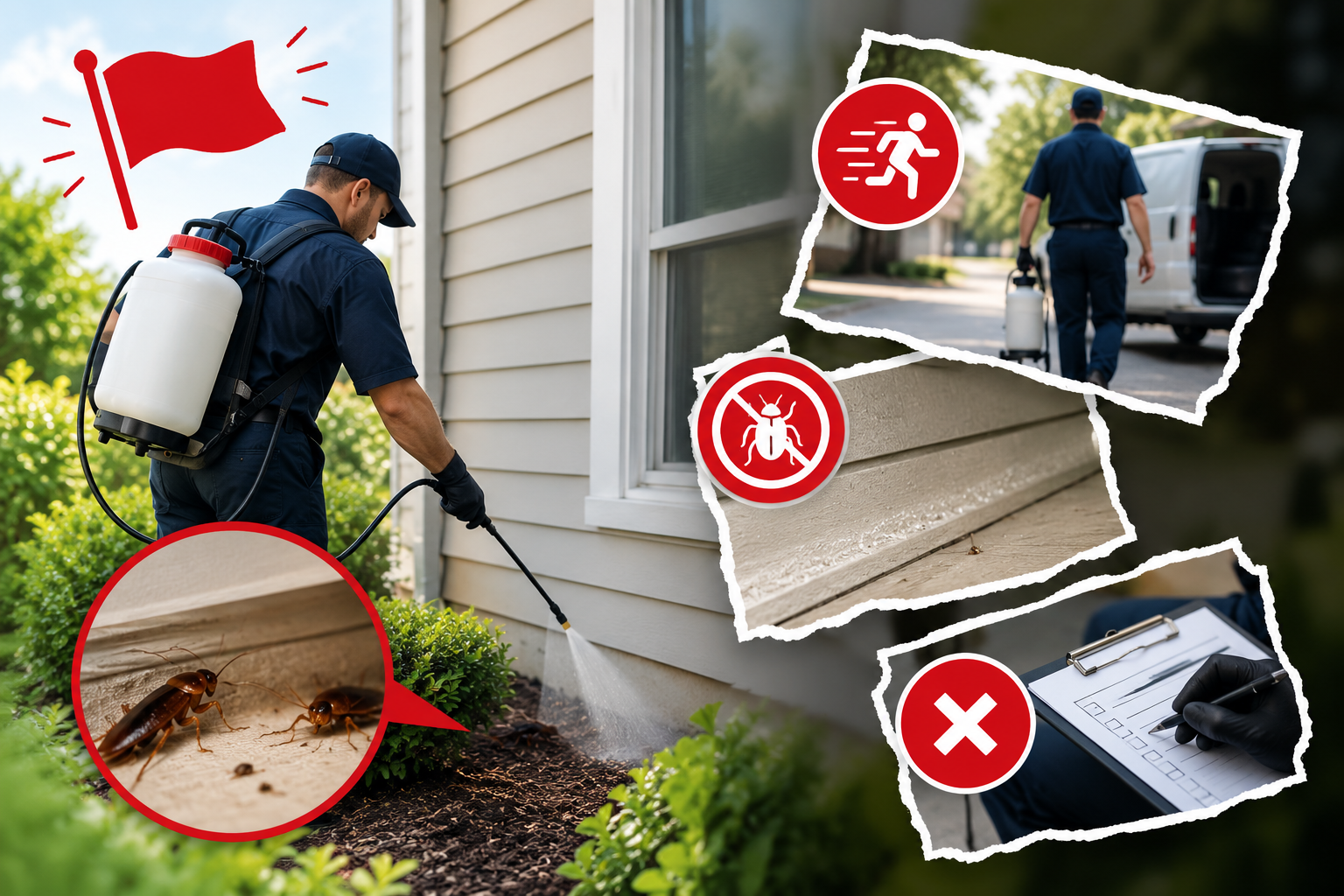
THE SHORT ANSWER"The biggest warning sign isn't that a technician uses a sprayer - spraying can be a legitimate part of pest control. The concern is when spraying is the entire service, with no questions asked, no pest identified, and no explanation of why the problem keeps coming back."
When you hire a pest control company, you expect more than a quick spray and an invoice. You want the pest identified, the source investigated, and a treatment plan that addresses the actual problem. Unfortunately, some services focus on quick treatments without properly inspecting the property. This can provide temporary relief while the underlying issue remains.
Sacramento homes and businesses can experience ants, cockroaches, rodents, termites, spiders, bed bugs and other pests throughout the year. Since every pest requires a different approach, proper inspection and targeted treatment matter.
Pinnacle Pest Control provides residential and commercial pest control services, including ant control, cockroach control, rodent control, termite control, bed bug treatment, spider control and commercial pest control. The key is knowing whether a company is actually addressing the pest problem or simply spraying and leaving. Here are the warning signs to watch for.
Red Flags at a Glance
Before the detail, here's what to watch for during a pest control visit — and why each one matters.
No discussion of where you've seen activity, or what pest is actually present.
A few minutes walking the exterior with no explanation of what was found.
A perimeter spray with no consideration of pests active indoors.
No mention of entry points, moisture, or the conditions letting pests back in.
Can't clearly say what's being applied, where, or why.
Pushing you to sign before an inspection is complete, or before you've had time to review terms.
They Don't Ask What You're Seeing
A pest control visit should start with questions. Where have you seen the pests? How often are they appearing? When did you first notice the problem? Have you found droppings, nests, damage or other signs of activity?
These details give a technician useful information before treatment begins. Ants around a kitchen sink may have a very different source from ants entering through an exterior wall. Rodents found in an attic require a different approach from rodents entering through a garage. Bed bugs require an entirely different inspection process from spiders around the exterior of a home.
Warning signs include:
- No meaningful questions about the infestation
- No discussion about where pests have been found
- No attempt to identify the pest
- No consideration of children or pets
- Little or no explanation of the recommended treatment
- The same generic service being offered for every problem
A professional pest control service should begin with understanding the problem rather than immediately reaching for a sprayer.
A Rushed Inspection Can Be a Warning Sign
There is no fixed amount of time that every pest control appointment should take. A small home with a straightforward ant issue may require a different amount of inspection time from a large property with a rodent or termite problem. However, an active infestation should not be treated as though every property is identical.
A proper inspection may involve looking around the interior and exterior, checking common hiding areas, identifying potential entry points and looking for conditions that could be contributing to pest activity.
If a technician arrives, spends only a few minutes walking around, applies a perimeter treatment and leaves without explaining what they found, it is reasonable to ask whether the property was properly assessed.
The goal is not to keep a technician at your home for an arbitrary amount of time. The goal is to spend enough time understanding the pest activity and determining what treatment or next step makes sense.
Only Spraying Outside? Ask Questions
Exterior pest treatments can be useful. They may form part of a preventative programme or help manage pest activity around the outside of a property. But an exterior spray is not automatically the right solution for every infestation.
Consider pests that may be active indoors:
- Cockroaches under appliances
- Ants entering through walls or gaps
- Bed bugs in bedrooms
- Mice inside attics or wall spaces
- Rats around crawl spaces
- Spiders inside garages or other areas
If you are seeing pests inside your property, the company should determine whether interior areas need to be inspected. Bed bugs are a good example - a meaningful assessment may involve looking at mattress seams, box springs, furniture, baseboards and other areas where bed bugs commonly hide. Simply treating the outside of the building would not address an infestation occurring inside a bedroom.
The same principle applies to rodents, cockroaches and ants. The treatment should be based on where the activity is actually occurring. At Pinnacle Pest Control, the recommended approach depends on the pest, the property and the findings during service - that may involve interior treatment, exterior treatment or a combination of methods.
They Never Explain Why the Pests Keep Coming Back
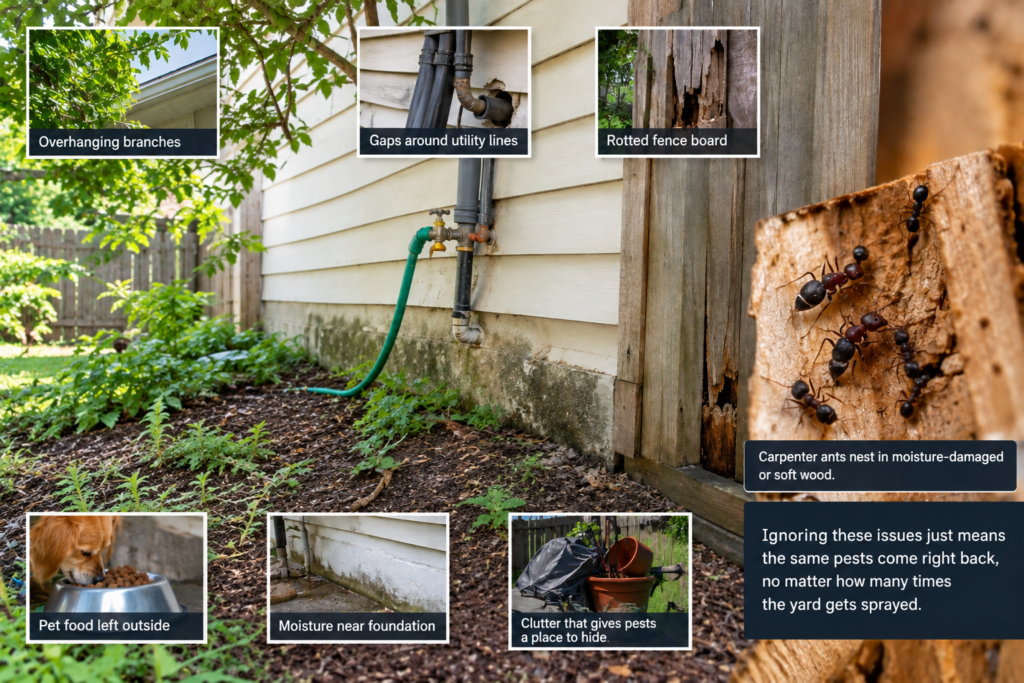
Getting rid of visible pests is only one part of effective pest management. Properties can have conditions that attract pests or provide easy access into the building. Common examples include:
- Gaps around pipes and utility lines
- Moisture around the foundation
- Standing water
- Damaged or softened wood
- Overgrown vegetation
- Pet food left outside
- Clutter around the property
- Gaps around doors and windows
If these conditions remain, pest activity may continue after treatment. Carpenter ants, for example, can be associated with moisture-damaged wood - treating the ants that are visible may help reduce activity, but identifying potential moisture problems or entry points can also be important. Rodent control provides another example: removing rodents without considering how they entered the property may leave the building vulnerable to future activity.
Pinnacle Pest Control looks at pest activity alongside conditions that may contribute to it. Property repairs, sealing gaps, improving sanitation or addressing moisture may still be the homeowner's responsibility, but identifying potential contributing factors gives customers a clearer picture of what needs to happen next.
They Can't Clearly Explain the Treatment
You should feel comfortable asking what is being applied to your property. A professional technician should be able to explain:
- Which pest the treatment is designed to address
- Where the treatment will be applied
- Why the method was selected
- What you should expect after service
- Whether there are any relevant precautions
You should not have to understand technical chemical terminology to receive a straightforward explanation. This becomes especially important when children, pets or other occupants are present.
At Pinnacle Pest Control, customers can ask questions about the recommended treatment and what to expect following service. The purpose of pest control should be targeted treatment based on the problem, not simply applying more product.
Long Contracts Should Always Be Read Carefully
An ongoing pest control agreement is not automatically a red flag. For some homes and businesses, regular service can be a practical way to manage recurring pest activity and provide preventative protection. The important thing is understanding the agreement before signing. Ask:
- What services are included?
- How often will the property be serviced?
- What is the total cost?
- Are there cancellation fees?
- Does the agreement automatically renew?
- Are there additional charges?
- What happens if pest activity continues?
A professional company should be able to explain its service agreement clearly. Be cautious if you feel pressured to sign immediately or if important terms are difficult to understand. You should have enough time to review the agreement and make a decision based on the service being offered rather than pressure.
Ask What Happens If the Pests Return
A service agreement and a guarantee are not the same thing. A contract explains the arrangement between you and the company. A guarantee explains what happens if covered pest activity returns under the stated terms.
Before hiring a pest control company, ask: what happens if I still see pests after treatment? The answer should be specific.
Find out how long the guarantee lasts, which pests are covered, what conditions apply and whether follow-up treatment is included. Pinnacle Pest Control provides specific guarantees for selected pest services:
Guarantee for subterranean termites.
Guarantee on the full rodent solution.
Guarantee on treated bed bug activity.
Free re-treatment is provided when covered pests return within the applicable guarantee period. The important lesson is not simply to look for the word "guarantee" — ask what that guarantee actually covers.
Can They Prove They Are Licensed?
California regulates the structural pest control industry through the Structural Pest Control Board. Before allowing a company to perform pest control work at your property, ask for its licensing information and verify it through the state's official license lookup system.
A reputable pest control company should be prepared to provide this information. If a company avoids the question, cannot provide licensing details or gives unclear answers about its credentials, consider that a reason to investigate further. Taking a few minutes to verify licensing can help you make a more informed decision.
Don't Judge a Company Only by Its Star Rating
Online reviews can be useful when comparing Sacramento pest control companies, but the overall star rating does not tell you everything. Read individual reviews and look for specific experiences. Did customers mention the technician? Did they describe the pest problem? Did the company explain the treatment? Was follow-up provided? How did the business respond when something went wrong?
Negative reviews can also provide useful information. No large service company is likely to have a completely complaint-free history. What matters is whether customers consistently describe good communication, thorough service and reasonable follow-up.
Independent sources such as the Better Business Bureau can also provide additional information about complaints and how a company has responded to them. The goal is to identify patterns rather than choosing a company based only on a five-star average.
Be Careful When You're Pressured to Sign
Pest problems can feel urgent. Finding rodents in an attic or bed bugs in a bedroom naturally creates a desire to solve the problem quickly. That urgency should not be used to pressure you into purchasing services you do not understand. Be cautious if a company:

- Offers a "today only" deal
- Pushes you to sign before an inspection is complete
- Recommends a larger package without explaining why
- Uses fear instead of useful information
- Refuses to give you time to review the agreement
A proper inspection should give you information about the problem and your options. Pinnacle Pest Control offers free, no-obligation inspections, allowing homeowners and businesses to discuss their concerns, understand the recommended approach and decide whether the service is appropriate for their situation.
Commercial Pest Control Requires a Different Approach
Commercial properties often need more than a quick perimeter spray. Restaurants, warehouses, offices, apartment buildings and other commercial facilities can have different pest risks depending on their operations, layout, food sources, storage areas and customer or employee traffic. Commercial pest management may involve:
- Regular inspections
- Pest monitoring
- Service documentation
- Identification of problem areas
- Preventative recommendations
- Targeted treatment
- Ongoing follow-up
A restaurant, for example, may require a different pest management strategy from an office building or warehouse. Pinnacle Pest Control provides commercial pest control based on the property, business environment and pest activity identified during service. For commercial customers, effective pest management is not simply about having someone spray around the building — it is about having a process for identifying, treating and monitoring pest activity.
What Should a Professional Pest Control Visit Look Like?
Knowing the red flags is useful, but it is equally important to understand what you should expect from a good pest control company.
The technician asks about your concerns and looks for signs of pest activity, entry points and contributing conditions.
Ants, cockroaches, termites, rodents, bed bugs and spiders behave differently — the treatment should reflect the pest that's actually present.
Targeted applications, bait, traps, monitoring, exclusion recommendations, or a combination of methods.
You should have a basic understanding of what the technician found and why a particular treatment was recommended.
Some problems require follow-up visits; others require property repairs or changes to conditions that attract pests.
You should be able to ask about licensing, treatment methods and precautions without feeling uncomfortable.
That level of communication can make a significant difference when choosing a pest control provider.
Six Questions to Ask Before Hiring a Pest Control Company
You do not need to be a pest control expert to compare companies effectively. Before agreeing to service, ask:
Will you inspect the areas where I have seen pest activity?
What pest do you believe I have, and how did you identify it?
What treatment are you recommending, and why?
What should I expect after treatment?
What happens if I continue seeing pest activity?
Can you provide your California pest control license information?
You can also ask about pricing, service frequency, cancellation terms, guarantees and follow-up visits. These questions help you compare companies based on the quality and clarity of their service rather than price alone.
Get Rid of Pests Now. Stay Protected Through the Seasons.
Get My Free Estimate
*Terms and conditions apply. Final eligibility language should be confirmed before publication.
What to Look for in Sacramento Pest Control
Choosing a pest control company should involve more than finding the lowest price. Look for a provider that takes time to understand the problem, explains its recommendations, communicates clearly and sets reasonable expectations.
Pinnacle Pest Control is a locally owned, family-run pest control company with more than 25 years of experience serving Sacramento and surrounding communities. Our pest control services include:
- Ant control
- Cockroach control
- Rodent control
- Termite control
- Bed bug treatment
- Spider control
- Commercial pest control
The approach is centred on identifying the pest, understanding where activity is occurring and selecting treatment based on the circumstances found at the property. We also provide free, no-obligation inspections, giving homeowners and businesses the opportunity to discuss their pest concerns before deciding whether to proceed with service.
Pinnacle Pest Control serves Sacramento and surrounding communities, including Roseville, Elk Grove, Folsom, Stockton, Fairfield, Rancho Cordova and Concord, with service available across more than 70 communities. If you are unsure whether your property is within the service area, contact the team to confirm.
Choosing a Pest Control Company in Sacramento
The biggest warning sign is not necessarily that a technician uses a sprayer. The concern is when spraying appears to be the entire service.
Before hiring a company, take time to verify its licensing, read customer reviews, understand the service agreement and ask what happens if the pests return.
Free, no-obligation inspections available.
*Mention this guide when you call so the offer can be applied. The discount should not be the only factor you consider when choosing a pest control company.
Frequently Asked Questions
What should I look for when choosing a pest control company?
Look for a company that properly inspects the property, identifies the pest, explains the recommended treatment, provides clear service terms, and answers questions about licensing, safety, follow-up, and guarantees.
What questions should I ask before hiring a pest control company?
Ask whether the company will inspect the areas where you have seen pest activity, how the pest was identified, what treatment is recommended and why, what to expect after treatment, what happens if pests return, and whether the company can provide California pest control license information.
Is an outside spray enough to solve an indoor pest problem?
Not always. Exterior treatments can be useful, but pests such as bed bugs, cockroaches, ants, and rodents may require inspection or treatment in interior areas. The approach should be based on where the pest activity is occurring.
What should happen during a professional pest control inspection?
A technician should ask about the pest activity, inspect relevant interior and exterior areas, look for entry points and contributing conditions, identify the pest, and explain the recommended treatment and next steps.
What happens if pests return after treatment?
Ask the pest control company about its guarantee before agreeing to service. Find out which pests are covered, how long the guarantee lasts, what conditions apply, and whether follow-up treatment is included.