Sacramento proudly holds the title of America's "Farm-to-Fork" Capital. From the high-end eateries in the DOCO district to the beloved family-owned taquerias on Franklin Boulevard, our city's culinary scene is thriving. But for restaurant owners and managers, that reputation comes with a heavy burden of responsibility.
In the age of social media, it takes exactly one photo of a cockroach scurrying across a dining room floor or a rodent dropping in a corner to destroy a reputation that took decades to build. Beyond the court of public opinion, the regulatory gaze of the Sacramento County Environmental Management Department (EMD) is constant and unforgiving.
For commercial kitchens in the Valley, pest control is not just about killing bugs; it is about compliance, audit-readiness, and brand protection. This guide explores the critical intersection of sanitation and pest management for Sacramento's food service industry and how to keep your doors open and your letter grade an "A."
The very thing that makes Sacramento's food scene great, an abundance of fresh, local produce, is also a significant vulnerability. When you bring crates of fresh vegetables directly from the fields into your prep kitchen, you are introducing a potential "Trojan Horse" for pests.
Field mice, earwigs, beetles, and even German cockroaches can hitch a ride on delivery pallets or inside cardboard boxes. Once inside the climate-controlled environment of a commercial kitchen, with its endless supply of water, grease, and heat, these pests do not just survive; they explode in population.
Furthermore, Sacramento's climate acts as an incubator. Our intense summer heat drives pests to seek the cool, damp refuge of commercial drains and walk-in coolers, while our mild winters allow year-round breeding for indoor species like the German cockroach and the house mouse.
When a health inspector walks into your facility, they aren't just looking for live bugs. They are looking for evidence of activity and conditions conducive to pests. Under the California Health and Safety Code, the threshold for a violation is low.
The inspector is looking for Integrated Pest Management (IPM). They want to see that you aren't just spraying poisons reactively, but that you have a proactive plan in place. They will check your Pest Control Logbook to see:
Crucial Note: If your pest control technician notes a hole in the wall in their service report, and you fail to patch it for three months, the health inspector views that as negligence on your part, not the pest company's.
While many pests can annoy a business, three specific groups pose the highest risk to Sacramento restaurants: German Cockroaches, Rodents, and Invasive Ants.
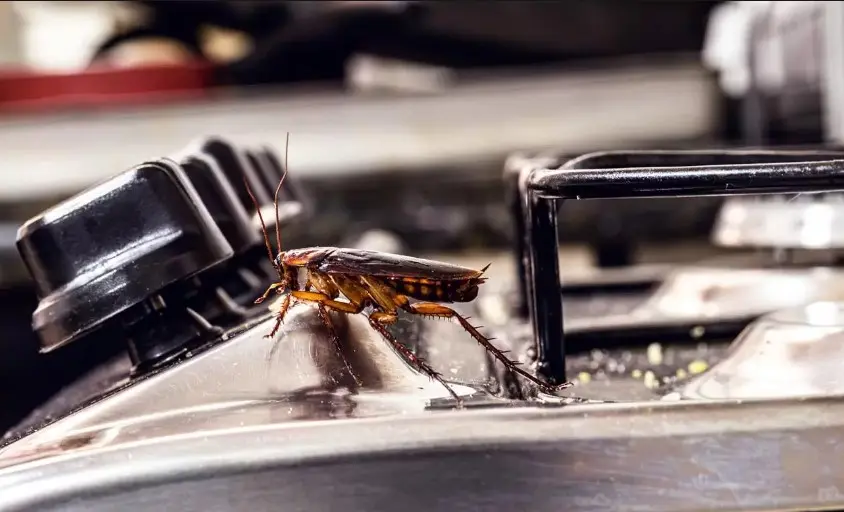
German cockroaches are widely considered the number one enemy of the restaurant industry. Unlike the large "sewer roaches" (American cockroaches) that wander in from outside, German cockroaches are domestic. They live inside your equipment and infrastructure.
Where they hide:
Why they are a compliance nightmare: German roaches reproduce faster than any other common roach. One female carrying a single egg case (ootheca) can birth 30-40 nymphs. In a warm kitchen, that population can turn into thousands in a matter of months. Inspectors have zero tolerance for them because they physically carry pathogens like Salmonella and E. coli from drains directly to your cutting boards.
Sacramento's older buildings, specifically in Midtown, Old Sacramento, and East Sac, are notorious for rodent issues. Roof rats and Norway rats are the primary concerns for commercial venues.
The Danger: Rodents do not just contaminate food; they destroy the building itself. They possess teeth that never stop growing, forcing them to gnaw constantly. They chew through electrical wiring (causing fire hazards), gnaw on PEX plumbing lines (causing floods), and ruin expensive inventory in dry storage by tearing into bags of flour, rice, and sugar.
The Sign: Inspectors look for "rub marks" (greasy smudges left by their fur along baseboards), gnaw marks on door sweeps, and droppings in the dark corners of storage closets or behind ice machines.
While roaches and rats get the headlines, ants are a persistent pest and difficult threat in the Sacramento Valley. Argentine Ants and Odorous House Ants are particularly problematic for commercial kitchens.
The Invasion: Unlike roaches that hide, ants march in bold, visible trails. They are driven by an intense need for moisture and sugar. A spilled soda syrup box or a leaky pipe can attract a colony numbering in the tens of thousands.
The Compliance Risk: Ants are considered a contamination vector. If an inspector finds ants inside a sugar bin or crawling across a prep table, that food must be discarded immediately. Because Argentine ants form "supercolonies" that span entire city blocks, killing the ones you see does nothing. The ant infestation will simply replenish from outside if the source isn't treated.
Many restaurant managers operate under the misconception that pest control is solely the job of the "bug guy." They believe that if they pay their monthly invoice, they shouldn't see pests.
However, commercial pest control is a 50/50 partnership.
If your sanitation is poor, pesticides will fail. Roaches and ants will always choose fresh food grease or sugar syrup over insect bait. You must starve them out to force them toward our control methods.
To keep Sacramento's aggressive pests at bay, your cleaning crew needs to go beyond the visible surfaces.
1. Floor Drains: Roaches thrive in the moisture of floor drains. Drains accumulate organic crud and grease buildup, which provides a food source for pests. They must be scrubbed with a stiff brush and enzymatic cleaner weekly to remove the biofilm.
2. Equipment Mobility: If you have fryers, ovens, or low-boy fridges that haven't been moved in six months, there is likely a grease ecosystem underneath them feeding a colony of roaches. Commercial kitchen equipment should be on casters. It must be moved regularly so the floor and walls behind it can be degreased and sanitized.
3. Trash Management: The dumpster area is the number one recruitment zone for rodents and ants. If your dumpster plug is missing or the lids are left open, you are inviting rats to dinner. Once they finish at the dumpster, the back door of your kitchen is their next stop. Power wash your dumpster pad regularly to remove the "trash juice" that attracts pests from blocks away.
4. Dry Storage Protocol: Never store cardboard boxes on the floor. Cardboard is a favorite harborage area for roaches and nesting material for mice. All dry goods should be transferred to sealable plastic containers, and shelving should be at least six inches off the ground to allow for cleaning and inspection underneath.
Pest control relies heavily on "exclusion", or, the physical blocking of entry points. In the commercial sector, this is vital because your facility is constantly bustling with deliveries and traffic.
In Sacramento, if you can see daylight under your back door, a mouse can get in. Mice can squeeze through a gap the size of a dime; rats need only a quarter. Standard rubber sweeps often fail quickly in high-traffic kitchens. We recommend industrial-grade brush sweeps that seal tight against the threshold but allow the door to function.
Go into your dish pit or under your prep sinks and look at where the pipes enter the wall. Often, the hole cut for the pipe is larger than the pipe itself. That gap is a superhighway for German cockroaches traveling between wall voids. These gaps must be sealed with wire mesh (which rodents can't chew through) and appropriate caulking.
Ants enter through microscopic cracks in grout, stucco, and foundations. Sealing these cracks with silicone helps create a physical barrier that complements chemical treatments. In a commercial kitchen, missing grout between floor tiles allows grease to seep into the subfloor, feeding pests where you can't clean. Re-grouting is an essential form of pest control.
When profits are tight, it is tempting to ask a line cook to spray some store-bought killer or set some traps from the hardware store. Do not do this.
In California, applying pesticides in a commercial food-handling establishment without a license is illegal. Furthermore, using the wrong products can be disastrous.
At Pinnacle Pest Control, we specialize in the high-stakes environment of Sacramento commercial food service. We don't offer cookie-cutter solutions; we offer audit-ready protection.
Our Commercial Integrated Pest Management (IPM) program includes:
In the restaurant business, your reputation is everything. You work too hard perfecting your menu and training your staff to let a preventable pest issue shut you down.
Don't wait for a customer complaint or a failed inspection. Partner with a local expert who understands the unique pressures of the Sacramento food industry. Contact Pinnacle Pest Control today for a comprehensive commercial inspection. Let us handle the crawling pests, the roaches, the ants, and the rodents, so you can focus on the food.
Restaurants are commonly targeted by ants, cockroaches, rodents, flies, and stored product pests. These pests are attracted to food, moisture, and waste, and they can quickly create contamination and compliance issues if not managed properly.
Public health codes require restaurants to maintain sanitary conditions and prevent pest entry. Active pest activity or signs of pests can lead to violations during health inspections, fines, or even closures. Effective pest control helps protect your customers, your reputation, and your ability to operate.
Good sanitation is one of the strongest defenses against pests. That includes regular cleaning of food prep areas, proper waste storage and removal, keeping floors and drains clean, sealing cracks and gaps, and eliminating standing water. A professional pest control program complements these efforts with monitoring and targeted treatments.